
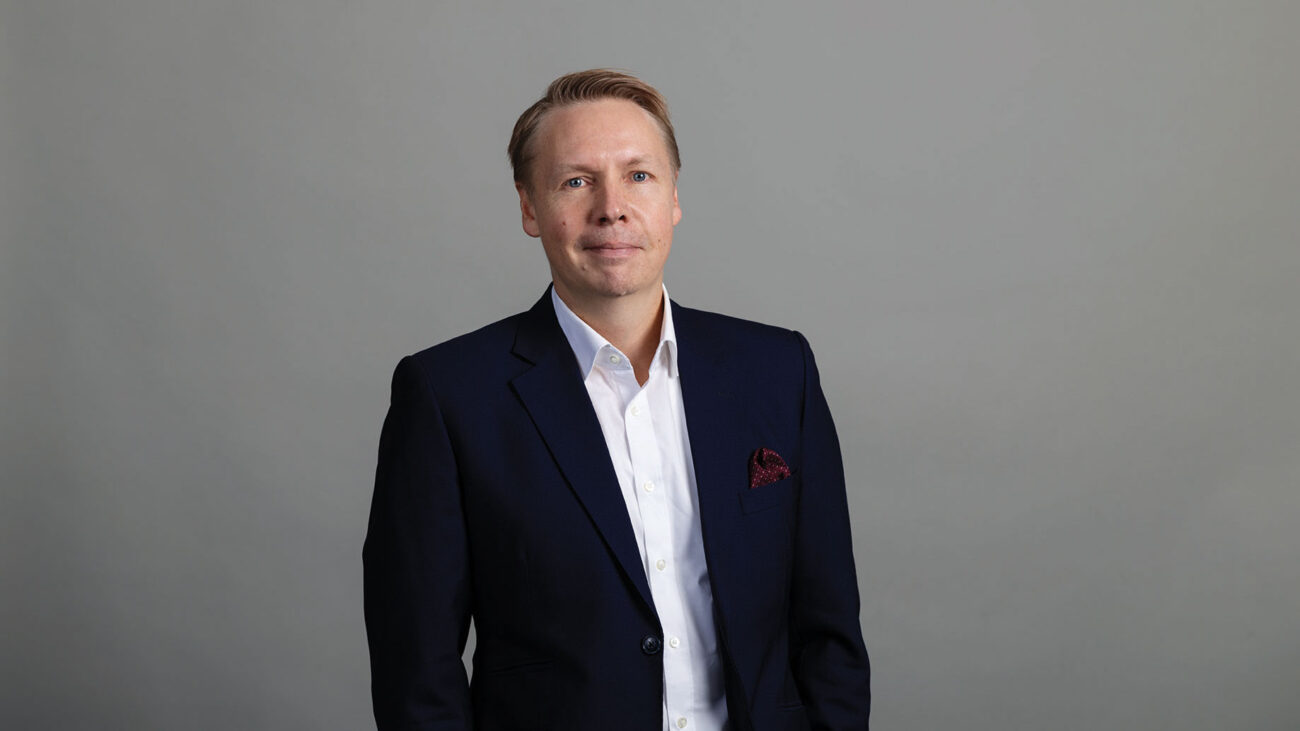
Jyri Hietala believes in the new dimensions of creating value from nature. He grew up in the shade of a pulp mill chimney, spent a decade in academia researching forests, and is now part of our ambitious Natural Capital team.
Finsilva, a CapMan Natural Capital portfolio company, launched Finland’s first pilot for nature value trading by restoring a 12‑hectare peatland in Pielavesi, Northern Savonia. With CapMan’s support, Finsilva partnered with Tapio, S Group, and LocalTapiola to launch the pilot in winter 2026.
The pilot allows companies to purchase verified nature value hectares created through biodiversity improvements on privately owned land. Once an open bog, the restored peatland drained in the 1960s to create productive forestland, but the plan failed, and the tree growth remained weak.
Now the peatland offers exactly the type of setting in which nature value trading makes sense: low forestry potential, high ecological payoff. To restore the peatland, the ditches will be blocked up, and most of the evaporative trees will be removed. As a result of water-economy restoration, peatland species will recover, and the area’s natural values will improve.
The pilot reflects an evolving view of how forests can generate value.
“In addition to economic performance, investors expect real improvements for nature. At CapMan, we identify and test new market opportunities, such as the voluntary biodiversity and carbon markets,” says Jyri Hietala, Managing Partner at CapMan Natural Capital.
Jyri joined CapMan in September 2025 after eight years as a CEO in UB Nordic Forest Management Ltd.
“CapMan is a forerunner. The natural capital market is still new, and we want to be one of its shapers. We believe demand will follow.”
This is part of CapMan’s active ownership: to be the forerunners, developing forestry from traditional timber and forest asset trade into new dimensions.
“Some consider forestry boring because trees grow slowly. But forest owners can have an impact on how the trees actually grow, how the asset is managed, and what kind of value is created”, says Jyri.
Biodiversity and profit go hand in hand in Northern Europe
In Northern Europe, compared to other regions, responsible forestry emphasises the ability to actively produce biodiversity benefits on the same land area while also managing the forest profitably.
In other words, biodiversity is integrated as one of the core decision‑making factors in forest management, rather than treated as a separate activity elsewhere.
“This differs from plantation forestry, where increasing biodiversity is largely based on designated set‑aside conservation areas. In such systems, timber production and biodiversity are spatially separated, whereas in Northern Europe the impact comes in scale by managing these together on the same site.”
A diversified Pan‑European forest portfolio with 225,000 hectares of land
CapMan Natural Capital manages sustainable forestry investments, natural sites and forest carbon sinks, and develops value in Europe and emerging markets. It manages approximately 225,000 hectares of land across seven EU countries with a market value of 1.5 billion euros, reinforcing its position as one of Europe’s leading independent forest asset managers.
The portfolio is geographically diversified with assets across Europe. Diversification lowers investment risks and requires in-depth knowledge of different supply and value chains from CapMan’s team, explains Jyri.
The markets CapMan operates in are characterised by sustainable forestry practices, transparent legal frameworks and opportunities for hands-on value creation through active asset management and additional sustainability measures.
“In Finland and Sweden, pine, spruce and birch are the predominating tree species in their boreal forests. The natural growing dynamics in the forests are similar and forest industry structures are comparable in both countries. The Baltic market is highly integrated to the Nordics by the same main tree species, with each country still having their own unique characteristics”, explains Jyri.
In Ireland, the biology and market dynamics are already very different to those in Northern Europe, with mainly planted sitka spruce and a mild climate. When you go further to Portugal and Spain, conditions are again different: unlike most trees, the cork oak is not cut down. Its bark is stripped for cork products, and it regenerates over time. This makes cork one of the most sustainable forest‑based materials in the world.
Active ownership improves forests while wood demand stay high
In February 2026, CapMan Natural Capital sold 24,000 hectares of forest assets in Latvia and Lithuania from Dasos Timberland Fund II to Inter IKEA Group.
During a decade of CapMan’s active, sustainability-driven forest management, the forests were FSC® certified and a number of operational improvements were implemented.
The demand for wood is expected to grow at an annual growth rate of 1,5%. At the same time, the supply side cannot increase wood production and market availability beyond a certain limit, which creates a structural imbalance between supply and demand.
“This imbalance is already visible today. A key reason is that the forest industry has made significant investments in Finland, Sweden, and partly elsewhere in Europe. At the same time, we have a structural wood supply shortage driven by the exclusion of Russian wood from European markets, and bark beetle-damaged forests in Central Europe.”
Because of the imbalance between demand and supply, wood prices remain high. The situation is unlikely to change as long as demand for forest industry products continues to grow.
A career built on deep forestry economics expertise
Jyri’s first encounter with forestry was in childhood, as his father worked in international process industry positions in the chemical wood-fibre sector. Jyri likes to tell people that he grew up in the shadow of the Sunila factory chimney in Kotka, on the southeast coast of Finland. The Sunila pulp mill operated from 1938 to 2023, making it one of the icons of Finnish forestry.
When young Jyri thought about studying business, he came across studies in business economics of forestry. He was convinced this was what he wanted, combining biology and economics.
“Working in the forest sector we must understand how the value chain functions globally, all the way from the biology to wood flows, forest industry products, and markets.”
After some years in academia and PhD studies, Jyri also worked as a Forest Economist at Pellervo Economic Research in Finland.
“As a forest economist, I deepened my theoretical expertise broadly across the entire forest sector. The work covered the global and Finnish industry, the impacts of the industry, timber markets and forest asset markets. I also led the annual forecasting activities.”
Creating future value through renewable energy and forest quality
Jyri’s motivation for natural capital markets stems from managing assets sustainably while also creating economic value.
In addition to forestry and nature value trading, renewable energy is another important aspect of natural capital. For example, Davvi, a Natural Capital portfolio company, is actively identifying opportunities for wind power projects and solar power plants on its land.
Here, too, it comes back to CapMan’s active approach: screening the markets to identify where the potential lies and jointly creating opportunities with wind and solar power developers rather than passively waiting for suggestions.
“When we acquire forest or land, our mission is always to increase its quality. When we finally sell it, it is in better condition than at the starting point. And it has created value in the best possible way.”
Jyri Hietala
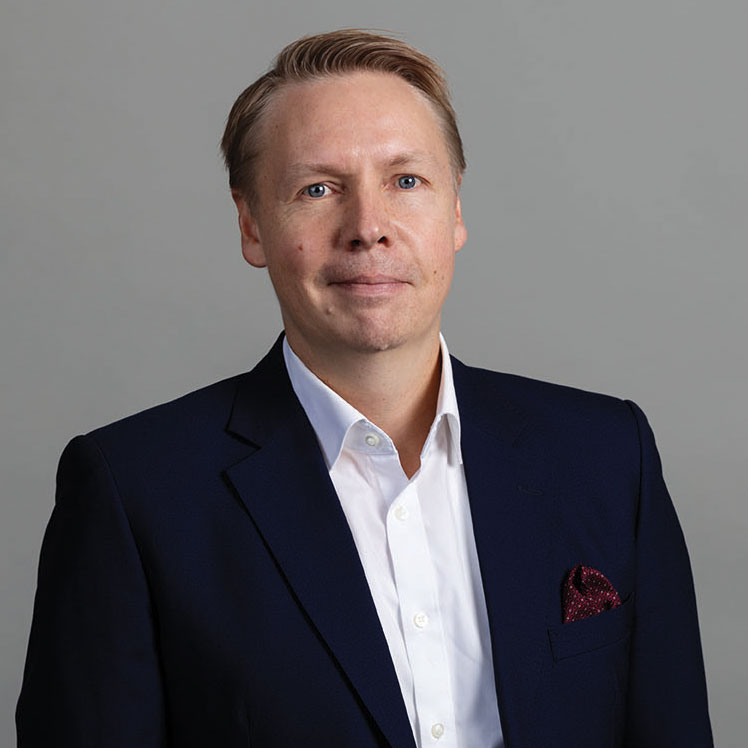
Education: M.Sc., Business Economics of Forestry, University of Helsinki, Finland.
Role: Managing Partner, CapMan Natural Capital.
Previous Experience: CEO, UB Nordic Forest Management Ltd. (2017–2025). Forest Economist, Pellervo Economic Research (2010–2017).
Interests: football, travelling, and spending time with family and friends.
Spotlight series – stories from behind the scenes at CapMan
This is the fourth part of the Spotlight series offering a look behind the scenes at CapMan through the eyes of our people. In each edition, we’ll share career stories, insights into the work of CapManians, and what motivates them in their roles.